
Scam detection
Red Flags: How to Spot a Fake or Unsafe Story Viewer
A checklist for unsafe Instagram story viewers: password requests, private unlock claims, survey walls, fake verification, and suspicious downloads.
Anonystory Editorial Desk ·
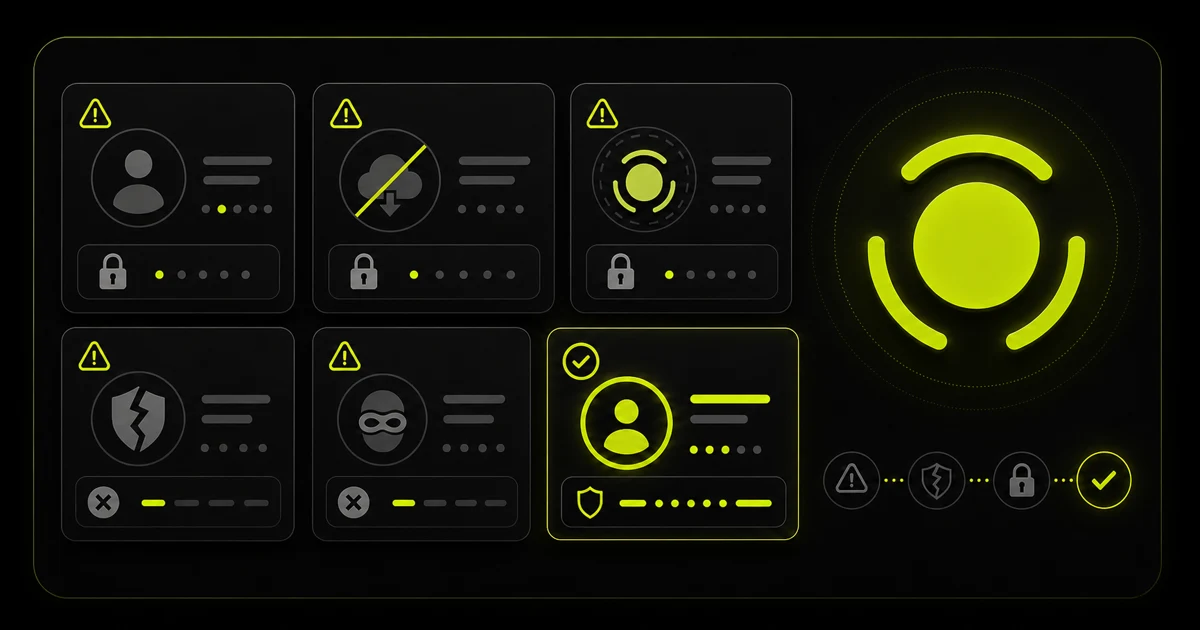
The clearest sign of an unsafe Instagram story viewer is a request for private access: your password, authentication code, session cookie, account connection, or payment for a “private unlock.” A legitimate public-story lookup needs only a public username and must be able to return no result.
Why is a password request never necessary?
Public stories do not require your personal Instagram credentials. If a viewer asks you to sign in, it is no longer a simple public lookup; it is asking for the ability to act as your account. That can expose messages, recovery details, connected profiles, and other account data.
Do not treat a familiar-looking Instagram login page as proof of safety. Check the address bar. A copied logo and interface can be placed on any domain.
Which “verification” steps are fake?
Fake verification usually follows a repeating pattern:
- The site claims it found a profile or hidden story.
- A progress bar stops near completion.
- The user is told to prove they are human.
- Each completed survey or app install opens another requirement.
- The promised story never appears.
Real public availability does not depend on completing marketing offers. A private story also does not become public after a survey.
What private-account claims should you reject?
Reject claims such as “view any private profile,” “unlock Close Friends,” “bypass approval,” or “guaranteed access.” Meta’s privacy controls let account owners limit who sees their content; making an Instagram account private is an actual permission setting, not a cosmetic lock that another website can remove.
Some profile facts remain visible publicly, but public profile facts are not the same as private posts or stories. A scam page may show a real username and profile image to make a fake unlock feel credible.
Are forced apps and extensions dangerous?
They are unnecessary for a basic public lookup and therefore deserve extra scrutiny. An app or extension can request broad permissions, inject ads, redirect searches, or collect browsing activity. Never install unknown software merely to display content that should already be viewable in a normal browser.
Also distrust downloaded files labeled as a “story viewer” when you expected an image or video. Cancel the download and leave the page.
What does a trustworthy result flow look like?
| Stage | Expected behavior | Warning sign |
|---|---|---|
| Input | Public username | Password, email, phone, cookie |
| Availability | Public, private, empty, or error | Every profile is “found” |
| Access | Browser-based result | Forced APK or extension |
| Limit | Private content is unavailable | Paid or timed private unlock |
| Download | The selected public media file | Installer or unrelated archive |
The ability to say “no active public story” is a positive quality signal. A tool that always produces a dramatic result is less credible than one that respects normal empty states.
Does HTTPS or a polished design make a viewer legitimate?
No. HTTPS protects the connection to a domain; it does not verify the operator’s promises. A deceptive site can obtain a certificate, copy Instagram’s visual style, display a real public profile image, and still collect credentials or route users through paid offers.
Judge the behavior, not the polish. A safer page keeps the task narrow, shows the actual domain clearly, does not imitate an Instagram sign-in form, and reaches either public media or an honest limit without changing the requested action.
How can you inspect a viewer before entering anything?
Use this short preflight check:
- Read the full domain from right to left and check for misspellings or extra subdomains.
- Open the privacy and contact pages before entering a username.
- Reject notification prompts, calendar subscriptions, profile downloads, and configuration files.
- Check whether the page promises impossible private access before it even knows the username.
- Leave if the first click opens a different domain or a full-screen advertisement that mimics a result.
- Confirm that the expected output is an image or video in the browser—not an executable file.
Browser reputation warnings are decisive stop signs, but the absence of a warning is not an endorsement. New or low-volume scam pages may not have accumulated enough reports to trigger one.
What is the difference between an unavailable result and a fake failure?
A normal unavailable result has a plausible reason: the profile is private, the username changed, there is no active story, the story expired, or Instagram is temporarily unreachable. It does not ask you to “fix” that state with a password or purchase.
A fake failure is designed to escalate access. It typically claims the content is ready but requires one more survey, download, account connection, or payment. If every failure leads to a more invasive step, the failure is part of the funnel rather than evidence that private media was found.
What should you do after entering credentials on a suspicious site?
Change your Instagram password from the official app or website, review active login sessions, enable two-factor authentication, and remove unfamiliar connected apps. Do not return to the suspicious page to “delete” the information you supplied.
For normal public viewing, start with the anonymous story viewer and provide only a public username. The broader safety model is covered in Is an Anonymous Story Viewer Safe?.
Frequently asked questions
Can a paid viewer open private stories? No. Payment does not change the owner’s privacy setting or approve your account.
Is a Chrome extension required for anonymous viewing? No. A public username lookup can work in the browser without extension permissions.
Does a real profile preview prove the tool works? No. Usernames, profile images, and other limited profile details can be public even when story content is private.
Anonystory only handles publicly available content and is not affiliated with Instagram or Meta.